Search
-
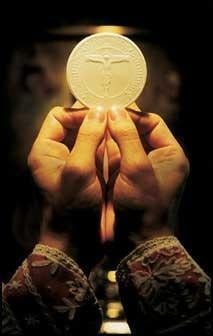 December 6, 2025Reception of Holy Communion: Respect Entering the new liturgical year provides a good opportunity for a “refresher” on both the distribution and the reception Holy Communion. Over the past several months, I have both experienced and heard of from other Eucharistic Ministers (EMs) some concerns viewed during the ritual of Holy Communion. As Catholics we believe Holy Communion to be the Body, Blood, Soul and Divinity of Jesus Christ, this stems from our belief in the Real Presence of Christ in the material elements of bread and wine, which comes about through transubstantiation at Mass.
With that in mind, I want to remind us and clarify some of the procedures we as Catholics employ during Holy Communion. For some, when we do something over-and-over again, a ritual or action may lose a little of its “specialness” or in case of the Church, the holiness of an action. Due to our belief in the Real Presence of Christ:
• The recipient of Holy Communion approaches the Sacrament with reverence and the “free assent of the will” meaning we believe in the Real Presence.
• The recipient should always receive the Eucharist as a gift, never grabbing the Body of Christ or the Cup of Precious Blood out the hand of the minister. Holy Communion is a gift that we receive with gratitude.
• The recipient responds to “Body of Christ / Blood of Christ” with “Amen!”, which means I believe, not with “thanks, cool dude or no problem.” All of which I have heard.
• The recipient comes to Holy Communion in a proper state, meaning that he or she is free from grave or mortal sins, having received the Sacrament of Reconciliation.
• The recipient consumes the Body and Blood of Christ in the presence of the Priest/Deacon/ Eucharistic Minister. We do not take it back to the pew or “save it for later.” We might step to the side once we have received it but never walk away with it in hand. • The recipient returns to the pew either joining in with the Communion Hymn, a form of prayer, or we offer a private prayer of thanksgiving. We do not engage with others in conversation; and, we remain in the church until the Mass has ended. We do not consume the Eucharist enroute to the exit door or car. Why? It was once explained to me in a very clear and concise way: If someone invited you to their home for dinner and after the meal while the hostess was preparing dessert, you wouldn’t get up from the table and leave without a goodbye. Now I am not suggesting that if one is unwell and has an emergency and has to leave, but rather it is about the routine of coming and going at will, that is the issue.
The ordinary, or extraordinary, minister of Holy Communion should:- Carefully place the Body of Christ in the hand or on the tongue as well as reverently offering the Cup of Salvation to the communicant.
- Pick up the Body of Christ if it falls to the floor, and consume it immediately or the communicant is free to do likewise.
- If the communicant walks away without consuming, the minister is to politely ask them to consume it in their presence.
- Should not distribute Holy Communion in a casual way, e.g., “Body of Christ or Blood of Christ, Sarah/ John.” One distributes Holy Communion with the words, “Body of Christ / Blood of Christ” only; no personalization or casualness needed. If you know someone and use their personal name, and then next in line is unknown to the minister, the use of a personal name can become awkward and divisive.
- The priest and/or deacon are the only one’s able to bestow an apostolic blessing upon a communicant or young child not actually receiving Holy Communion. He extends his hands and uses these or similar words: “May God who loves you always bless you +.” An extraordinary minister of Holy Communion, the lay EM simply says in these or similar words, without making the sign of the Cross or touching the person’s head, “God Loves you or God be with you.”
Who May Receive Communion at Mass?
Many people, Catholics and non-Catholics alike, question the “rules” around receiving Holy Communion in the Catholic Church. Many denominational Christian churches, those churches who denominated or broke from the Roman Catholic Church, which was founded by Christ and is the original Christian Church, “invite” everyone at their service to a “communion” service. It causes great confusion and leads some people to think that Catholics are selective and unwelcoming. But that is not True. We are the Universal Church, that is what the word “Catholic” means. It was—and is—Christ’s wish that all will be One, one day. But until that happens, based on what we believe—the Real Presence—we are called to guard and protect the Sacrament of the Eucharist and not treat it with unbelief or with a casualness that is unworthy of Christ Himself:
For practicing Catholics, the Church teaches that one must be well-disposed to receive the Body, Blood, Soul and Divinity of Christ. Are we free from mortal sin? Have we been forgiven or renewed by the Sacrament of Reconciliation; and if not, may we receive with the immediate intention of going to the next, first available confession time. Yes! Is the world perfect? No. Do I believe that everyone receiving every Sunday is “well prepared?” Perhaps not? But that doesn’t mean we give up the Truth we believe to accommodate current culture. If we do, then nothing is True, for Truth is not subject to change, it is or it isn’t Truth.
For denominational Christians, whom we welcome and invite to Mass, but we do not admit to the Real Presence at Holy Communion, something they themselves do not hold to be True. The real question then is; why does one wish to participate in something that they do not believe in? Rather, non-Catholics may join the communion line at Mass and receive a blessing from the priest/deacon or God’s Words of Love from an EM. I believe this action and invitation is actually very welcoming.
As Roman Catholics, we are blessed to have this great and gracious gift of Christ, from Christ Himself. Just some thoughts on the ritual of Holy Communion from a Catholic perspective