Search
-
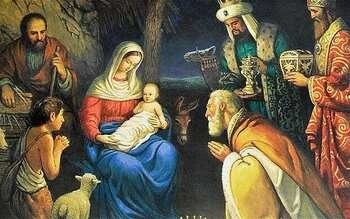 January 4, 2026Epiphany in Greek means “manifestation”. In the West, the visit of the Magi is celebrated as the
event through which the Lord was “manifested” to the pagans and, therefore, to the world. In the Eastern Church, the accent for this solemnity is on the Trinitarian “manifestation” during the Baptism of Jesus in the River Jordan. While what is central on Christmas is the birth of the Child Jesus, on Epiphany, what is highlighted is that this poor and vulnerable Child is King and Messiah, the Lord of all the earth. With Epiphany, Isaiah’s prophecy is fulfilled, as can be discerned through the first reading: “Rise up in splendor, Jerusalem! Your light has come” (Is. 60:1ff). It’s as if the liturgy is saying – don’t cut yourselves off, don’t give up, don’t remain prisoners of your “convictions”, don’t be demoralized, react, “lift up your eyes”! Like the Magi, observe “the star” and you will find “the star, Jesus”.
The Magi
The Magi “raise their eyes” and set out on a journey, going where it was logical to “seek” a king, ina palace. Their arrival creates a bit of turmoil, so much so that King Herod convokes the priests and Pharisees, the experts in Sacred Scripture. They “know” that the Messiah would be born in “Bethlehem”. But their “knowing” does not go beyond. It has nothing to do with their lives, their experience. They remain stuck. They do not “get up”; they remain safe and comfortable in the palace. The Magi arrive from afar; the priests and Pharisees are already near, yet they are blinded by their knowledge, by their certainties, by their privileged positions…. It seems that God reveals Himself to those who do not bask in their own light, to those who do not seek the limelight of notoriety.
Epiphany manifests Jesus and our hearts
Epiphany not only manifests Jesus, the Son of God, but also reveals our hearts. It shows us that the Savior can be welcomed (as happened with the shepherds and the Magi) and rejected (as happened with King Herod). Let’s not hide the fact that there are aspects of “the magi” and aspects of “King Herod” in each of us. There’s a part of us ready to set out on the journey, to know and understand, to grow and improve, to surpass ourselves. But there is also a Herod in us always ready to destroy our dreams and hopes. A Herod, always ready to massacre, lurks behind our desire for what is good, beautiful and right, not wanting us to find “the Child” who can change our lives. The Magi teach us that life is a journey and that we are invited to live it as Jesus did, while the Herods of this world delude and flatter us into believing that success and power are necessary in order to exist.
The gifts
Gold and incense recall the gifts of the Queen of Sheba to King Solomon, a reference we find in the Responsorial Psalm (Ps. 72). Gold represents Jesus’ kingship; incense, His divinity; myrrh, His humanity since it was a substance that was used to sprinkle over the bodies of the dead. The light of the star always leads to an act of adoration, of bowing before the mystery that has drawn near. It leads to giving, but even more, to self-giving. It is precisely this act of “self-giving” that stops many from allowing themselves to be attracted to Jesus because it leads to the fear of losing a position, comfort, security, privileges, thus hindering them from a change of life and conversion