Search
-
 February 15, 2026Sirach (15:15-20), which is our first reading today is brief yet powerfully clear and to the point: “If you choose you can keep the commandments, they will save you; if you trust in God, you too shall live; he has set before you fire and water to whichever you choose, stretch forth your hand. Before you are life and death, good and evil, whichever he chooses will be given him.” We hear in this the great gift of free will, which stems from God’s Divine Love, for nothing forced is love; and all that God asks from us is love. From this love we see that all that is laid before us by God requires a choice on our part: to be good or evil, to choose the Commandments or not, to trust in God or not. And, we see a truth that is not always recognizable in today’s world, that choices have consequences. What we do, say and are – will have an end result one day.
The Psalm this weekend, Blessed are they who follow the law of the Lord leads us into the second reading this weekend, 1 Corinthians (2:6-10) that tells us that the Truth of Christ is one that is absolute, without change and without degrees of truth; and we are called to live by His Wisdom His Wisdom is more valuable than human knowledge, which requires applying this knowledge in making good decisions in alignment with moral and spiritual principles, not just human intelligence. We need not concern ourselves with “opinions” but rather with absolute, unchanging Truth. Pay no heed to the “rulers” of this age: the politicians, movie stars, athletes or influencers. Rather, listen to the Word made flesh: Absolute Truth. For His Wisdom is meant for one thing and one thing only: Our excellence.
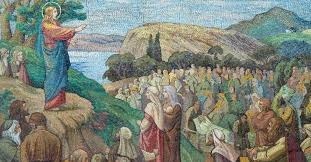
This Sunday’s Gospel, Matthew (5:17-37) is a passage from the Sermon on the Mount where Jesus teaches about the fulfillment of the law and the Prophets, and offers a deeper, more spiritual understanding of God’s Commandments.
Matthew 5: 17-20, Jesus fulfills the law in the opening statement, His purpose for coming is to fulfill or enlighten us with the law and its benefits, not to destroy the law. The law remains important; Jesus will fulfill its ultimate purpose. Catholics are called to understand this as perfecting the old covenant, fulfilling its prophesies and moral teachings (remember we believe the Old Testament is not destroyed with the New Testament, it is fulfilled.) And, the righteous required is not an external covering—the rituals or the observances, i.e., the way we bow or genuflect but rather it is an internal transformation—a change of heart and a way of living. Matthew 5:21-26 is a teaching on anger where Jesus extends the commandment “You shall not kill” to include anger and insult. The Catholic Church teaches that anger can be sinful if it leads to hatred or harm. Reconciliation is emphasized; believers should seek peace with others before offering gifts to God. Matthew 5: 27-30 is a teaching on adultery where He extends the commandment “You shall not commit adultery” to include lustful thoughts. The Church teaches about the importance of the purity of heart and chastity. Radical steps (metaphorically “cutting off” parts) emphasizes the seriousness of avoiding sin. Matthew 5: 31-32 teaching on divorce notes that Jesus says divorce is not permitted except for marital unfaithfulness. The Catholic Church holds that marriage is a lifelong covenant and does not recognize divorce; annulments may be granted if the marriage was invalid from the start (meaning that, for example, if you knew your spouse could not be faithful but you think that “once he or she marries me my love for them will change him or her) that is not a valid marriage. Matthew 5: 33-37 is a teaching on oaths, where Jesus says do not swear oaths but let one’s “yes” be yes and one’s “no” be no (be what you say). The Catholic Church values truthfulness and integrity without the need for swearing oaths lightly.
Jesus calls us to a deeper, interiorized obedience to God’s law, focusing on the heart and intentions; that moral teachings are foundational for Catholic ethics, and a call to holiness and transformation through His Grace; and, the Church encourages confession, reconciliation, and the pursuit of virtue in living out these teachings.